
OUR TSC: THE KNOWLEDGE HOUSE WITH PIT-PAT
Balancing of Screens and the Personal Interactions

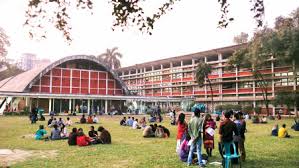
There was a time—willy-nilly, without any formal announcement—that our university life revolved around one magnetic place: University of Dhaka TSC. The Teacher-Student Centre, lovingly called TSC, was not merely a building of brick and cement. It was our knowledge house, our parliament of ideas, our academy without walls. There, under the shade of old trees and beside the echoing corridors, we gathered—not with mobile sets glowing in our palms—but with books pressed against our chests and curiosity burning in our eyes.
We had no smartphones with endless data packs. No social media notifications pit-pat on our screens. Instead, we had the real pit-pat of conversation: the sound of footsteps approaching, the laughter of friends, the rustle of book pages turning. We sat in circles—sometimes on benches, sometimes on the grass—engaging in chit-chat that slowly transformed into serious debate. What began as a tit-bit of information from one friend would grow into a pel-mel exchange of ideas. Knowledge flowed freely, willy-nilly, from one mind to another.
At TSC, everyone was a teacher and everyone was a student. A friend studying economics would explain inflation and fiscal deficits in simple language. Another, reading philosophy, would narrate the thoughts of great thinkers. A literature student would recite poetry, interpreting metaphors with passion. Sometimes a respected teacher joined us, adding depth to our discussions. We were not afraid to ask questions. We were not ashamed to admit ignorance. We debated, disagreed, laughed, and reconciled. In that open arena, knowledge did not remain confined within one head; it was transferred into all friends.
Specific books and research topics were dissected thoroughly. One would say, “Have you read this chapter?” Another would reply, “Yes, but I think the argument is incomplete.” And then began a lively analysis. We would consult references, cross-check facts, and sometimes rush to the library. Ideas were refined. Perspectives broadened. Our personalities were shaped. We improved ourselves not by scrolling but by conversing.
The TSC was a living organism. It breathed with youth, vibrated with dreams, and resonated with intellectual curiosity. A casual chit-chat could lead to a research proposal. A simple tit-bit of information might spark a lifelong interest. We learned to listen patiently. We learned to articulate our thoughts clearly. We learned respect for differing opinions. We learned that knowledge grows when shared.
But now, times have changed. Today, we sit together physically, yet mentally we are miles apart. The mobile set has become our closest companion. Even when friends gather at the same table, each is engrossed in his or her own screen. The pit-pat of conversation has been replaced by the tap-tap of keyboards. Instead of discussing books, we scroll through feeds pel-mel, absorbing information in fragments. We consume tit-bits of news, half-read articles, and viral posts—willy-nilly, without verification or reflection.
Relationships have become squeezed. Once, we looked into each other’s eyes while speaking; now we glance briefly before returning to our screens. Loneliness creeps in silently. Ironically, though connected to thousands online, we feel disconnected from those sitting beside us. Frustration grows. Anxiety spreads. We compare our lives with curated digital images and feel inadequate. Wilfully or willy-nilly, we become isolated.
The change is not entirely negative. Mobile technology has made knowledge accessible. Research papers, online lectures, global conferences—all are available at our fingertips. A student in Bangladesh can attend a webinar from Europe or read journals published in America. Information travels at lightning speed. Yet, information is not the same as knowledge, and knowledge is not the same as wisdom.
In the past, knowledge was digested through dialogue. We would challenge one another’s assumptions. We would examine different angles. We would refine arguments collectively. Today, much of our learning is solitary. We read alone, watch videos alone, react alone. The communal aspect of knowledge creation is fading. The warmth of human interaction, the spark in a teacher’s eyes, the enthusiasm of friends debating passionately—these cannot be downloaded.
Great minds often emphasize deep work and focused thinking. Many renowned scientists and scholars prefer limited digital distraction. They understand that creativity requires silence, contemplation, and meaningful conversation. While technology can assist research, overdependence can dilute attention. If we are constantly interrupted by notifications, how can we cultivate profound insight?
The question that haunts us is: what will happen to us in the future? We are earning money in the world. We are becoming great by wealth, by infrastructure, by visible progress. But what about knowledge and inspiration? What about moral courage, intellectual honesty, and social empathy?
If willy-nilly we allow ourselves to be governed entirely by digital devices, we may produce a generation rich in data but poor in wisdom. Wealth without knowledge is fragile. Economic growth without critical thinking is unstable. Third world countries like Bangladesh face a delicate crossroads. On one hand, digital connectivity offers immense opportunity—education, entrepreneurship, innovation. On the other hand, excessive digital immersion threatens the very fabric of social cohesion.
In earlier days at TSC, we learned cooperation naturally. We built networks not through LinkedIn requests but through genuine friendship. We supported each other academically and emotionally. Today, as relationships become squeezed, social trust may decline. When individuals become self-centered and isolated, collective progress slows.
For developing nations, the stakes are high. Our demographic dividend—our youth population—can be a blessing or a burden. If young minds are guided toward collaborative learning, critical inquiry, and ethical leadership, they can transform the nation. But if they become addicted to superficial content, chasing viral fame pel-mel, neglecting deep study and civic responsibility, the consequences could be severe.
What then is the solution? Should we abandon mobile phones? Certainly not. Technology is a tool; it is neither angel nor demon. The challenge is balance. We must reclaim spaces like TSC—not necessarily the physical building alone, but the spirit of collective learning. We must create digital-free hours, where friends sit together and engage in meaningful pit-pat. We must encourage academic clubs, reading circles, and research forums.
Imagine if once again students gathered at the Teacher-Student Centre, not merely for selfies but for seminars. Imagine if teachers spent informal hours discussing ideas outside classrooms. Imagine if tit-bits from online articles were brought into face-to-face debate, refined and contextualized. The digital and the human could complement each other rather than compete.
We also need role models who demonstrate disciplined technology use. When successful professionals show that deep reading and reflective thinking matter more than constant online presence, young people will follow. Schools and universities can design programs that integrate technology thoughtfully, emphasizing critical thinking over passive consumption.
Our fate, and the fate of countries like Bangladesh, depends on our choices today. If we prioritize wealth alone, we may achieve temporary prosperity but lose intellectual depth. If we combine economic ambition with a culture of knowledge-sharing, we can build sustainable greatness.
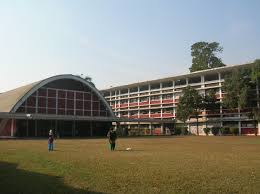
Let us remember the TSC days—not with mere nostalgia but with intention. Let us bring back the spirit of willy-nilly idea exchange, the joyful chit-chat that blossoms into scholarship, the pel-mel debate that sharpens reasoning. Let us ensure that the pit-pat we hear is not only the notification sound of a mobile but the lively rhythm of human conversation.
The future need not be bleak. If we consciously balance technology with togetherness, information with wisdom, wealth with knowledge, then Bangladesh and other developing nations can rise not only in GDP but in intellectual stature. The knowledge house still stands. The question is: will we enter it again, or will we remain outside, staring at glowing screens?
The choice is ours.
